

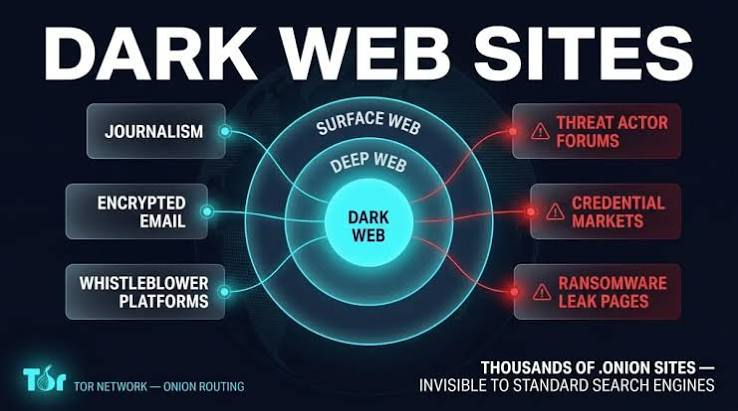
The internet is made up of many different layers, each with its own technologies, communities, and risks. While most people interact with the open web through search engines, social networks, online stores, and public websites, other parts of the internet are less visible and often associated with privacy concerns and cybersecurity threats.
The term “dark web” is frequently used to describe hidden online services that require specialized tools or configurations to access. Some of these services may have legitimate privacy-related purposes, while others have been associated with illegal activity, including the exchange of stolen information.
Platforms referred to as ultimate shop highlight the broader concerns surrounding underground digital marketplaces and the importance of understanding online security in an increasingly connected world ultclub.
What Is the Dark Web?
The dark web is commonly described as a part of the internet that is not indexed by standard search engines and may require specialized software or networks to access.
It is important to understand that not all hidden online services are inherently illegal. Privacy advocates, journalists, researchers, and people living under restrictive regimes may use privacy-focused technologies for legitimate reasons.
However, the anonymity associated with some hidden services can also attract criminal activity. This may include fraud, the sale of stolen information, malware distribution, and other forms of cybercrime.
For this reason, users should approach the dark web with caution and a strong understanding of online security risks.
Understanding Underground Digital Marketplaces
The concept of an underground digital marketplace is not new. Criminal networks have increasingly used online platforms to exchange services, information, and compromised accounts.
A platform known as Ultimate Shop has been associated with discussions surrounding this broader ecosystem. The important lesson for everyday internet users is not how to access underground services, but how the existence of such marketplaces demonstrates the value of personal information.
Stolen credentials and personal data can become valuable assets in criminal networks. This creates risks for people whose information has been exposed through data breaches, phishing attacks, or weak security practices.
Why Stolen Information Is Valuable
Personal information can be used in many different ways.
Compromised credentials may allow attackers to attempt unauthorized access to online accounts. Personal details can be used to create convincing phishing messages or impersonation attempts.
Other information may be combined with data from separate breaches to create more detailed profiles of individuals.
This means that even information that appears insignificant can become valuable when combined with other data.
The Connection Between Data Breaches and the Dark Web
When organizations experience data breaches, exposed information may eventually appear in underground online communities or marketplaces.
This creates a difficult challenge for victims. Even after a company fixes the vulnerability that caused the breach, the information may already have been copied or distributed.
A breach can therefore have consequences that continue long after the original security incident.
This is one reason why users should avoid reusing passwords and should enable additional security protections whenever possible.
Account Takeovers and Credential Reuse
One of the most common risks associated with stolen credentials is account takeover.
Many users reuse passwords across multiple services. If one password is exposed, attackers may attempt to use it on other platforms.
A successful account takeover can lead to unauthorized access to private messages, financial information, personal files, or other sensitive data.
Using unique passwords for every important account is one of the simplest ways to reduce this risk.
Phishing and Social Engineering Threats
The existence of stolen information can also make social engineering attacks more convincing.
Attackers may use personal details to create messages that appear to come from trusted organizations, coworkers, friends, or service providers.
These messages may request login credentials, payment information, or other sensitive data.
Users should be particularly cautious when a message creates urgency or asks them to bypass normal security procedures.
Online Security Practices Everyone Should Follow
Users do not need to interact with hidden online marketplaces to be affected by the risks associated with them.
Good digital security practices can help reduce exposure to many common threats.
Important steps include:
- Use unique passwords for important accounts
- Enable multi-factor authentication
- Avoid clicking suspicious links
- Be cautious with unexpected attachments
- Keep software and devices updated
- Monitor account activity
- Avoid sharing unnecessary personal information
These basic practices can significantly improve online security.
The Importance of Privacy Awareness
Privacy is another major concern in the modern digital environment.
People often share personal information across many services without fully understanding how it may be stored or used.
Users should consider what information they provide, whether a service appears trustworthy, and how their data may be protected.
Limiting the amount of personal information shared online can reduce the potential impact of a future breach.
Why Businesses Must Take Security Seriously
Organizations play a major role in protecting user information.
Companies that collect personal data must implement appropriate security controls to reduce the risk of unauthorized access.
This may include access restrictions, encryption, employee training, monitoring systems, and incident response procedures.
Businesses should also collect only the information they genuinely need. Storing unnecessary data can increase the potential consequences of a breach.
The Difference Between Privacy and Security
Privacy and security are closely connected but not identical.
Privacy concerns how information is collected, used, and shared. Security focuses on protecting that information from unauthorized access and other threats.
A platform may offer privacy features but still have security weaknesses. Similarly, strong security controls do not automatically guarantee responsible data practices.
Users should consider both factors when evaluating online services.
The Future of the Dark Web Landscape
The online threat environment continues to evolve. Cybercriminals are becoming more organized, and stolen information can move quickly between different groups and platforms.
Automation and emerging technologies may also increase the scale and sophistication of cyberattacks.
At the same time, cybersecurity professionals are developing improved tools for detecting breaches, monitoring threats, and protecting digital identities.
The future of online security will depend on continuous adaptation and greater awareness among both individuals and organizations.
What Users Should Remember
The existence of platforms associated with underground digital marketplaces is a reminder that personal information has value.
Users should not assume that a breach cannot affect them. Even individuals who follow good security practices may be affected if a company they use experiences a security incident.
However, strong digital habits can reduce the potential damage.
Unique passwords, multi-factor authentication, careful browsing, privacy awareness, and regular monitoring all contribute to a safer online experience.
Conclusion
The dark web landscape is complex and includes both legitimate privacy-focused uses and criminal activity. Underground marketplaces associated with stolen information demonstrate the broader risks created by data breaches and weak cybersecurity practices.
Platforms referred to as Ultimate Shop highlight the importance of understanding how stolen data can become part of a wider digital threat ecosystem.
For everyday users, the most important lesson is simple: online security should be treated as an ongoing responsibility.
By protecting accounts, limiting unnecessary data sharing, recognizing suspicious activity, and staying informed about cybersecurity risks, users can reduce their exposure to the dangers associated with stolen information and the wider underground digital economy.
