

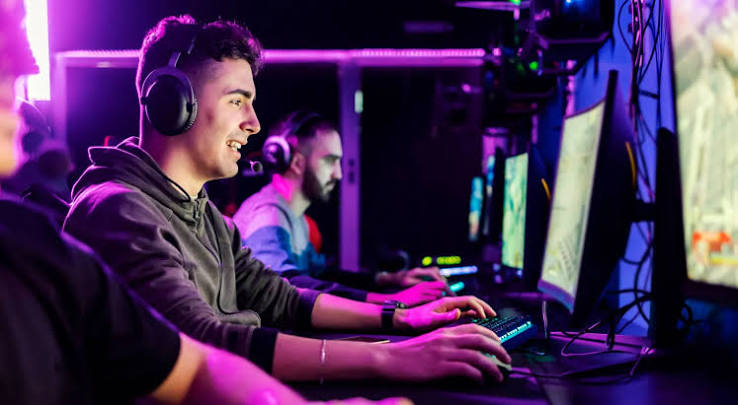
Online slot gacor has transformed the entertainment industry by giving people an active role in digital experiences. Instead of simply watching a story or listening to music, players can control characters, make decisions, compete against other people, explore virtual environments, and influence the direction of gameplay.
The growth of high-speed internet, powerful hardware, smartphones, and cloud technologies has made this form of entertainment increasingly accessible. Games can now connect players across countries and provide experiences that continue evolving long after their initial release.
As online gaming continues to develop, it is influencing not only entertainment but also communication, technology, business, and digital culture.
From Offline Games to Connected Worlds
Early video games were generally self-contained experiences.
Players could complete levels, achieve high scores, and finish campaigns, but the experience was mostly limited to the content stored on the device.
Internet connectivity changed this model.
Developers could create games where players shared the same digital environment in real time.
This created a foundation for the modern online gaming industry.
The Appeal of Interactive Entertainment
The biggest difference between gaming and many traditional entertainment formats is interaction.
A movie follows a predetermined sequence.
A game responds to player actions.
Players can choose strategies, explore locations, make mistakes, and attempt different approaches.
This sense of control makes gaming highly engaging.
Multiplayer Experiences
Multiplayer gaming allows several people to participate in the same digital environment.
Players can compete against one another or cooperate toward shared objectives.
Human behavior adds unpredictability to every session.
Even when players repeat the same game mode, the outcome can be different because the participants make different decisions.
Competitive Gaming
Competition is one of the strongest attractions of online gaming.
Players can test their abilities against others and track their performance through statistics and rankings.
Competitive systems can encourage players to practice and improve.
For some people, reaching a higher rank becomes a long-term personal goal.
Ranked Progression
Ranked systems give players measurable objectives.
A player may begin at an entry-level rank and gradually advance by winning matches and improving performance.
This creates a sense of progression beyond the game’s basic storyline.
However, competitive gaming is most enjoyable when players treat both victories and defeats as part of the learning process.
The Expansion of Esports
Professional competitive gaming has developed into esports.
Organized tournaments can feature teams, individual players, coaches, commentators, analysts, and production crews.
Large events can attract audiences through livestreaming and physical venues.
Esports has therefore become an important branch of modern entertainment.
Gaming as Spectator Entertainment
People do not always need to play games to enjoy them.
Millions of viewers watch professional matches, livestreams, gaming videos, and tournaments.
Some audiences follow specific players or creators because of their personality and presentation style.
Gaming has consequently become both an interactive and spectator-based form of entertainment.
The Rise of Gaming Creators
Content creators have built entire careers around gaming.
They produce gameplay videos, reviews, tutorials, challenges, commentary, and livestreams.
Some specialize in particular genres, while others cover gaming news and entertainment more broadly.
Creators have become an important connection between games and audiences.
Livestreaming and Real-Time Communities
Livestreaming creates direct interaction between creators and viewers.
Audiences can communicate through live chat while a game is being played.
Creators can answer questions, react to comments, and involve viewers in their content.
This creates a community around the broadcast rather than simply a collection of passive viewers.
Mobile Gaming Changes Accessibility
Smartphones have expanded the reach of online gaming.
A player does not necessarily need a dedicated gaming computer or console.
Many mobile devices can run multiplayer games and connect users to large communities.
The portability of smartphones also allows players to enjoy shorter gaming sessions.
Cloud Gaming and Accessibility
Cloud gaming may further reduce hardware barriers.
Instead of requiring a powerful local machine, games can potentially run on remote servers.
The player’s device receives the gameplay stream through the internet.
This approach could allow more people to access demanding games without purchasing high-end hardware.
Cross-Platform Gaming
Different gaming platforms traditionally created separate communities.
Cross-platform systems are changing this situation.
Players using supported computers, consoles, and mobile devices may be able to participate in the same online environment.
This makes multiplayer gaming more convenient for groups of friends.
Persistent Online Worlds
Some games provide worlds that continue operating even when individual players leave.
Events may occur while players are offline.
Communities can develop their own activities and traditions.
This creates the feeling of participating in a living digital environment.
The Importance of Game Updates
Modern online games can change significantly after release.
Developers may add new maps, characters, missions, items, and gameplay mechanics.
Updates can also fix bugs and address performance problems.
Continuous development allows games to remain relevant for longer periods.
Seasonal Experiences
Seasonal content provides temporary changes to games.
Developers may introduce special events, challenges, rewards, or visual themes.
Limited-time experiences can encourage players to participate together.
They can also create memorable moments for communities.
Player Customization
Customization allows players to personalize their experience.
Characters, outfits, vehicles, profiles, homes, and other digital objects may be modified.
Cosmetic customization can provide a form of digital self-expression.
Digital Identity
Online players often become recognizable through usernames and avatars.
Achievements, rankings, preferred play styles, and community relationships can contribute to a player’s digital identity.
For some people, this identity becomes part of their wider online presence.
User-Generated Content
Some gaming platforms allow users to create content themselves.
Players can build maps, design challenges, create objects, or develop entire experiences.
This gives communities an active role in expanding the content available within a platform.
Gaming and Creativity
Creative gaming experiences can encourage experimentation.
Building environments and designing virtual spaces require players to think about structure, appearance, functionality, and presentation.
Some players may develop interests in design, architecture, animation, or programming through these activities.
Communication and Teamwork
Multiplayer games often require players to communicate effectively.
Teams may need to coordinate strategies, share information, and respond quickly to unexpected situations.
Successful cooperation can require trust and an understanding of each player’s role.
Gaming Across Cultures
International multiplayer slot depo 5k connect people from different regions.
Players can encounter different languages, communication styles, and cultural perspectives.
This makes online gaming a global social environment.
Challenges of Online Gaming
The growth of online gaming also creates challenges.
Toxic communication can make communities unpleasant.
Cheating can damage competitive fairness.
Scams can target inexperienced players.
Excessive gaming can interfere with important responsibilities.
These issues require attention from both players and developers.
Protecting Personal Information
Players should be careful about the information they share online.
Passwords, financial details, addresses, and other sensitive information should be protected.
Players should also be cautious when interacting with unfamiliar users.
Avoiding Gaming Scams
Scammers may use attractive offers to target players.
Messages promising free currency, rare items, or special account rewards can sometimes lead to fraudulent websites.
Players should verify offers through official sources rather than trusting unexpected links.
Maintaining a Healthy Gaming Routine
Gaming should remain part of a balanced lifestyle.
Players need sufficient sleep, physical activity, work or education, and time with family and friends.
Long gaming sessions should include regular breaks.
A balanced routine can make gaming more enjoyable over the long term.
Artificial Intelligence and Gaming
Artificial intelligence is likely to influence future gaming significantly.
AI can help developers test games, analyze player behavior, improve moderation, and create more sophisticated computer-controlled characters.
Future games may provide more responsive experiences based on individual player behavior.
Virtual Reality
Virtual reality can make digital environments more immersive.
Players can use headsets and motion controls to interact with three-dimensional worlds.
Online VR could create new forms of multiplayer communication and entertainment.
The Future of Digital Entertainment
Gaming may increasingly combine with other forms of digital entertainment.
Virtual concerts, interactive stories, social events, livestreams, and creator experiences can exist alongside traditional gameplay.
This could make future games feel more like complete digital entertainment platforms.
The Role of Technology
Every generation of gaming depends on technological progress.
Better processors improve performance.
Advanced graphics hardware improves visual quality.
Faster networks improve connectivity.
Cloud infrastructure supports large communities.
Artificial intelligence creates new possibilities for interaction.
Together, these technologies continue expanding what games can offer.
Opportunities for the Industry
The growth of online gaming has created opportunities for developers, designers, programmers, streamers, esports professionals, marketers, event organizers, and content creators.
Independent developers can also distribute games digitally to international audiences.
This has made the industry more accessible to smaller teams.
What Players Can Expect Next
Future players may experience games that are more adaptive, social, and immersive.
Virtual worlds could respond dynamically to player decisions.
AI-powered characters could provide more natural interactions.
Cloud services could make advanced games available on more devices.
Cross-platform communities could connect larger groups of players.
Conclusion
Online gaming has transformed interactive entertainment by giving players control over digital experiences and connecting them with communities around the world.
Multiplayer games provide competition and cooperation, while esports has turned competitive play into organized entertainment. Streaming and content creation have created new ways to watch and discuss games, while mobile and cloud gaming are making digital experiences more accessible.
At the same time, players must remain aware of challenges involving online safety, cheating, toxic behavior, digital spending, and excessive gaming.
The future of online gaming is likely to involve artificial intelligence, virtual reality, cloud computing, user-generated content, and increasingly connected communities.
As these technologies develop, games may become more than individual entertainment products. They could become persistent digital spaces where people play, communicate, create, compete, and experience entertainment together.
Online gaming is therefore not simply evolving as an industry. It is helping redefine what interactive entertainment can mean in the digital age.
